Section 278 Surfacing Compliance: A Developer’s Guide to UK Highways Adoption
August 25, 2026 Commercial, Road Surfacing 3 min read
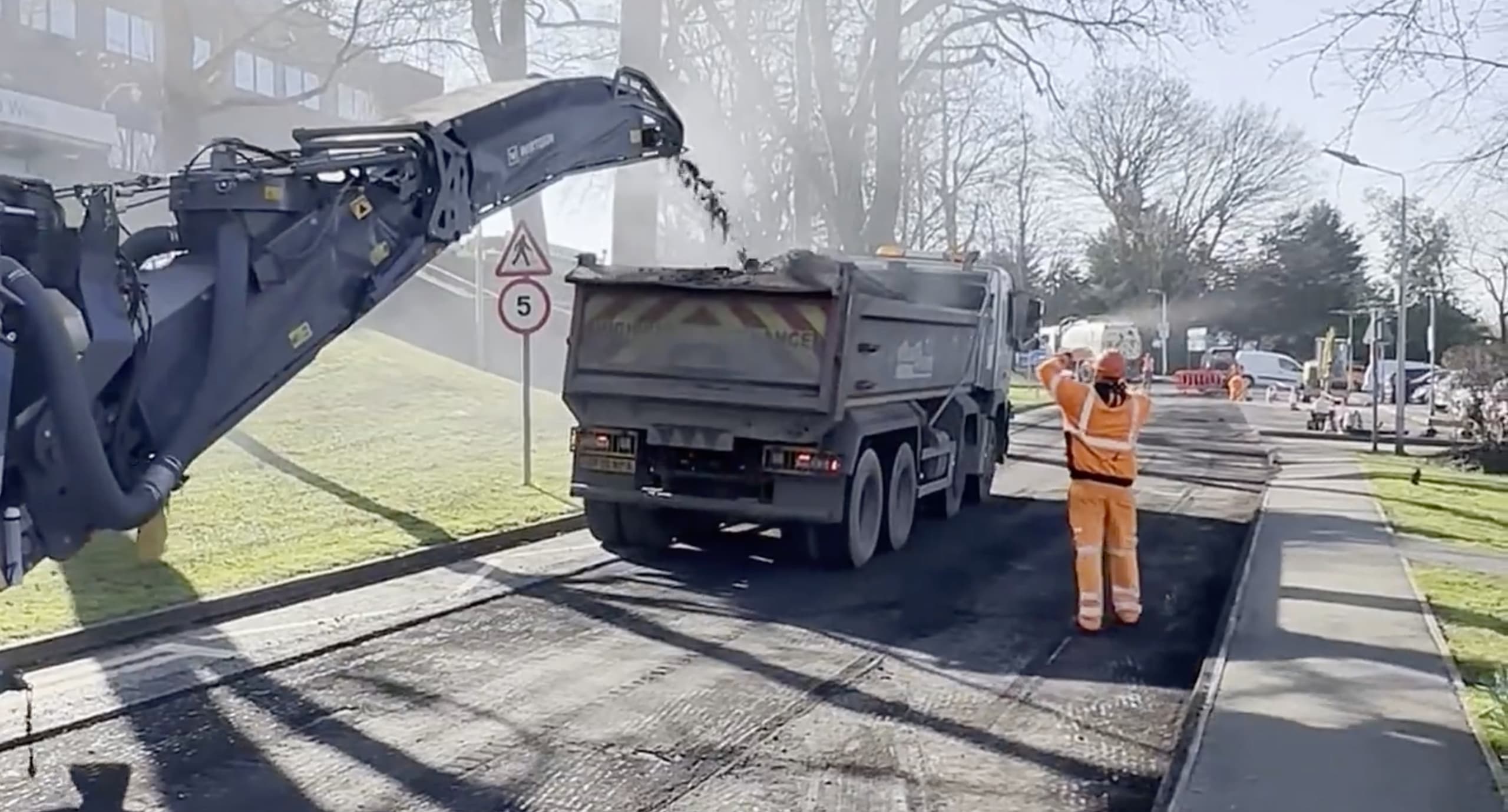
Section 278 (S278) of the Highways Act 1980 requires property developers to fund and execute alterations to public roads when a commercial development impacts the surrounding road network. Achieving local authority adoption, along with securing the release of financial bonds, requires strict compliance with national design frameworks such as the Design Manual for Roads and Bridges (DMRB) and the Manual of Contract Documents for Highway Works (MCHW).
Technical Surfacing Specifications: S278 Standards vs. Standard Private Surfacing
| Specification Parameter | S278 Public Highway Standard | Standard Commercial Private Surfacing |
| Sub-Base | Type 1 Unbound Mixture (MCHW Clause 803) | Standard Type 1 MOT Sub-Base |
| Binder Course | 100-150mm Dense Asphalt Concrete (AC 20/AC 32) | 60-80mm Dense Asphalt Concrete |
| Surface/Wearing Course | 30-40mm Stone Mastic Asphalt (SMA 10/14) or Hot Rolled Asphalt (HRA) with High-PSV Chipping | 30-40mm Asphalt Concrete (AC 10 Close Surf) |
| Polished Stone Value (PSV) | Minimum 60-68+ (Designated skid resistance zones) | Standard commercial aggregate specification |
| Air Void Content | Strictly controlled: 2%-6% target range | Standard compaction controls |
Core Inspection & Adoption Protocols
- Volumetric Core Sampling: Core extraction tested to BS EN 12697 to verify layer depth, air void percentage, and bulk density.
- Surface Regularity Testing: A 3-metre straightedge assessment ensuring surface deviations do not exceed 3mm under high-speed or heavy-traffic conditions.
- Skid Resistance Certification: Polished Stone Value (PSV) verification for high-stress areas including junction approaches, roundabouts, and pedestrian crossings.
- SuDS & Positive Drainage Sign-Off: Water run-off and gulley connection testing to ensure zero standing water along the adopted carriageway boundary.
Critical Project Risks and Mitigation
- Thermal Segregation: Asphalt laid below minimum threshold temperatures fails to achieve required compaction, leading to early surface failure. Maintain continuous thermal monitoring during delivery and compaction.
- Sub-Base Infiltration: Water or silt contamination of the sub-base prior to binder placement destroys structural integrity. Seal exposed layers immediately with an approved tack coat or membrane.
- Incorrect Binder Selection: Using standard bitumen grades under heavy vehicle loads leads to severe rutting. Match binder viscosity directly to projected axle loads.
FAQS
What is the difference between a Section 278 and a Section 38 agreement?
Section 278 covers alterations or connections to existing public highways. Section 38 covers the adoption of newly constructed internal estate roads into the public highway network.
Who pays for Section 278 highway works?
The developer funds all design, legal, construction, site inspection, and administrative costs incurred by the local highway authority.
When is an S278 financial bond released?
Local authorities release the bond in stages: typically 75% upon issuing the Certificate of Substantial Completion, and the remaining 25% after the 12 month maintenance period following final inspection.
Can any contractor execute S278 surfacing works?
No. Contractors must be pre-approved by the relevant local highway authority, hold New Roads and Street Works Act (NRSWA) accreditation, and carry a minimum of £10 million in public liability insurance.
Get your free surfacing quote
Let our team of experts handle your surfacing — get a free quote today.