Warm Mix Asphalt vs Hot Mix Asphalt: UK Highways & Commercial Guide
September 23, 2026 Road Repairs, Road Surfacing 6 min read
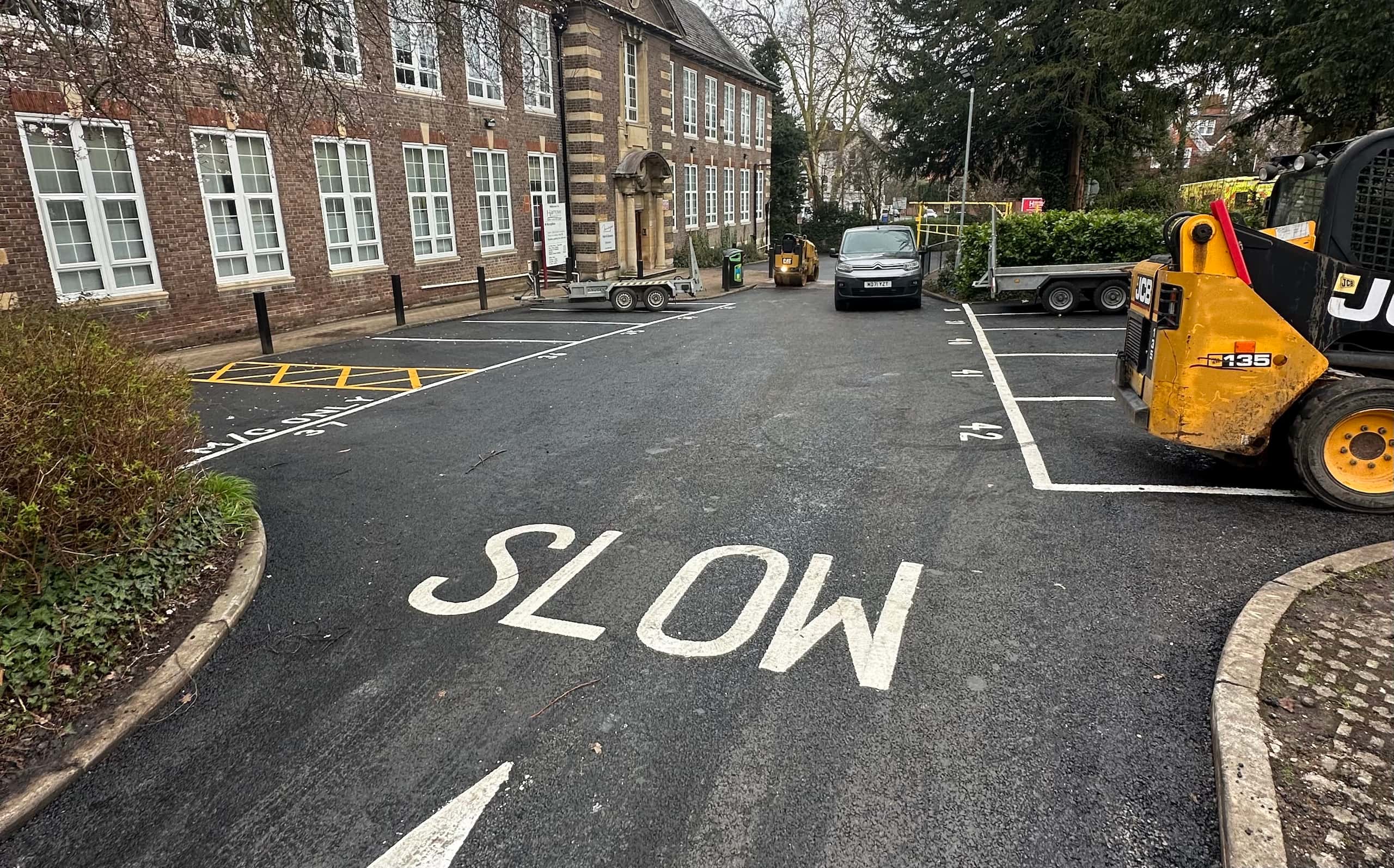
Local authorities, highways engineers, and commercial site developers across the UK face growing pressure to balance carbon reduction targets with strict budget frameworks and tight project deadlines. When planning road resurfacing, car park construction, or commercial infrastructure upgrades, choosing the correct surfacing material is critical to long-term durability and operational efficiency.
Hot Mix Asphalt (HMA) has long been the traditional choice across British roads. However, Warm Mix Asphalt (WMA) has gained significant momentum as local councils work towards Net Zero goals and seek to minimise traffic disruption.
Understanding the technical differences, operational advantages, and specification criteria between warm mix asphalt and hot mix asphalt helps procurement teams and developers make informed decisions for their surfacing assets.
What Is Hot Mix Asphalt (HMA)?
Hot Mix Asphalt is the traditional surfacing material used across UK road networks for decades. It is produced by heating aggregate and bitumen binders to temperatures between 150°C and 180°C at the asphalt plant.
This high temperature removes moisture from the aggregate and thins the bitumen binder, ensuring a workable material that can be transported, laid, and compacted to high density on site.
Key Characteristics of HMA:
- High Structural Strength: Proven performance under heavy, continuous traffic loads and HGV axle weights.
- Extensive Specification History: Fully integrated into traditional UK Highways Agency specifications and local council frameworks.
- Temperature Dependency: Requires rapid laying and compaction on site before the mix cools below its workable threshold, particularly during colder weather.
What Is Warm Mix Asphalt (WMA)?
Warm Mix Asphalt is an engineered asphalt technology manufactured at temperatures between 110°C and 140°C, typically 20°C to 40°C lower than standard Hot Mix Asphalt.
To achieve proper workability at these lower temperatures, suppliers incorporate specialised additives such as chemical technologies, organic waxes, or water-foaming techniques into the bitumen. These additives reduce the viscosity of the binder without compromising its structural performance once compacted and cooled.
Key Characteristics of WMA:
- Lower Embodied Carbon: Requires less energy to heat at the batching plant, reducing carbon emissions during production by up to 15% to 30%.
- Faster Cooling and Curing: Reaches ambient temperature quicker after compaction, allowing roads and car parks to reopen to traffic earlier.
- Reduced Fumes and Heat: Creates a safer, more comfortable working environment for on-site installation teams and nearby residents.
Direct Comparison between Warm Mix Asphalt vs Hot Mix Asphalt
| Feature / Metric | Hot Mix Asphalt (HMA) | Warm Mix Asphalt (WMA) |
| Production Temperature | 150°C to 180°C | 110°C to 140°C |
| Carbon Footprint | Baseline standard | 15% to 30% reduction in production CO2 |
| Cooling & Traffic Opening | Standard cooling window | Up to 50% faster cooling time |
| On-Site Fumes & Odour | Standard bitumen emissions | Significantly reduced fume emissions |
| Cold Weather Performance | Good thermal window if laid quickly | Requires precise additive management in near-freezing conditions |
| UK Standards Compliance | Fully compliant with BS EN 13108 | Fully compliant under Clause 900 series specifications |
Key Benefits for Council Procurement & Commercial Developers
1. Carbon Reduction & Net Zero Targets
UK local authorities are committed to strict carbon reduction frameworks. Because Warm Mix Asphalt requires significantly less burner fuel to heat aggregates at the batching plant, specifying WMA directly contributes to lowering the embodied carbon of highways maintenance and infrastructure projects.
2. Shorter Road Closures & Traffic Disruption
The time required for fresh asphalt to cool before taking vehicle weight often dictates the length of road closures. Because WMA is laid at lower initial temperatures, it cools to a traffic-ready state much faster than HMA. For busy urban routes, night-time maintenance, or commercial retail parks, this speed allows roads to reopen hours earlier, reducing traffic management costs and public disruption.
3. Improved Workability & Extended Haul Distances
Lower manufacturing temperatures slow down the oxidative hardening of the bitumen binder during transport. WMA can maintain its workability over longer haul times from the supply plant to the site, ensuring optimal compaction quality even on remote routes.
4. Health, Safety & Environmental Comfort
Working with asphalt at lower temperatures reduces steam, fumes, and thermal radiation on site. This improves safety for site operatives and lowers nuisance odours for nearby residential neighbourhoods, schools, and commercial premises.
Potential Considerations When Specifying WMA
While Warm Mix Asphalt offers clear environmental and operational advantages, procurement officers and site engineers should consider specific operational factors:
- Moisture Sensitivity Management: Because aggregates are heated to lower temperatures, suppliers must ensure all aggregate moisture is thoroughly evaporated to prevent bitumen stripping over time. Sourcing material from established, high-quality asphalt suppliers ensures strict moisture controls at the plant.
- Ambient Temperature Limits: In extreme winter conditions, temperature drops during transport and laying must be carefully monitored to ensure full compaction density is achieved.
For these reasons, many local authority contracts specify Warm Mix Asphalt as the primary choice for standard resurfacing schemes, while maintaining Hot Mix Asphalt options for specific cold-weather windows or heavy-duty structural applications.
Matching Material Selection to Project Needs
Choosing between Warm Mix Asphalt and Hot Mix Asphalt comes down to site-specific requirements, local authority specification frameworks, and environmental objectives.
- Specify Warm Mix Asphalt when: Project priorities include cutting carbon footprints, minimising night-work closure windows, improving site safety in confined urban spaces, or reopening commercial car parks quickly.
- Specify Hot Mix Asphalt when: Working under legacy municipal specification frameworks that mandate traditional hot formulations, or executing specific heavy-load structural repairs during near freezing winter weather.
Partnering with an Accredited Surfacing Contractor
Delivering a durable, fully compliant road or commercial surface depends on precision installation, correct sub-base preparation, and adherence to national highways standards.
Smart Surfacing Solutions operates as a trusted partner for local councils, commercial property developers, and civil engineering contractors across London, Surrey, and Kent. As a Constructionline Gold Member, CSCS accredited, NRSWA accredited, and SSIP supporter member, our team delivers high-level compliance and safety across every project.
We work closely with leading UK asphalt producers, including Tarmac, FM Conway, Aggregate Industries, and Day Aggregates, to source both Hot Mix and Warm Mix formulations tailored strictly to your project specifications. Whether your contract requires a full Section 278 highway modification, commercial car park resurfacing, or local road repairs, we ensure high quality workmanship executed on time and within budget.
Contact our team today on 020 3808 8086 or request a free quote online to discuss your road surfacing specifications.
Get your free surfacing quote
Let our team of experts handle your surfacing — get a free quote today.